
The real benefits of playing games for cognitive skills, social connection, and stress relief, with guidance for parents choosing age-appropriate games.
The benefits of playing games go far beyond fun alone — gaming can also sharpen thinking skills, build social connection, and offer a real outlet for stress that many people overlook. Many families still worry that gaming does more harm than good, even though a growing body of research suggests that playing in moderation actually brings well-rounded benefits. This guide is written for beginner parents and new players who want to understand the real benefits of playing games, along with what to watch out for to keep play balanced.
Key Takeaways
- The benefits of playing games span cognitive skills, social connection, and stress relief
- Many genres train problem-solving and quick decision-making
- Playing with others builds relationships and teamwork skills
- Beginner parents should understand game ratings and set reasonable play-time limits
- Choosing age-appropriate games is the first step toward safe, healthy gaming
How Gaming Helps Develop Cognitive Skills
Puzzle and strategy games train the brain to analyze and solve problems systematically. Players must assess situations and make decisions under time pressure, a skill that translates directly into everyday life.
Multiple studies suggest fast-reaction action games help train focus and processing speed, while long-term strategy games build big-picture thinking and forward planning — benefits of playing games that often go unrecognized.
The Social Benefits of Playing Together
- Co-op games build communication and coordination skills with teammates
- Online games open the door to meeting new people who share your interests
- Playing with family is a shared activity that strengthens relationships
- In-game communities help build teamwork and collaborative problem-solving
Playing games with others, whether friends or family, reduces feelings of isolation and creates shared stories to talk about — a benefit that's often overlooked when people discuss the benefits of playing games.
Does Gaming Really Relieve Stress?
Many people turn to games to unwind after work or school, since gaming can temporarily pull attention away from daily stress, especially relaxing genres like puzzle or simulation games.
That said, using games to relax should stay in moderation. Playing too much, to the point it affects sleep or daily responsibilities, can end up creating a new source of stress rather than relieving the one it was meant to solve. A useful habit is treating gaming like any other leisure activity — enjoyable in reasonable doses, but not a substitute for rest, exercise, or face-to-face time with people you care about.
What Beginner Parents Should Watch Out For
Parents just starting to let their kids play games should first understand game rating systems, since each game differs in content suitability — violence, language, and in-game spending systems that may not be appropriate for young children.
It also helps to talk with kids about in-game spending and interactions with other players in online games, to prevent issues that can arise from unsupervised play.
How to Choose Age-Appropriate Games for Kids
Choosing the right game for a child's age starts with checking the age rating listed on the game store page, along with reading reviews from other parents to gauge whether the content includes violence or other inappropriate material.
For younger kids, creative or puzzle games focused on learning are a good starting point, while older kids may be ready for adventure or team-based games that build more collaboration skills — though play time should still be monitored closely either way.
Tips for Balancing Game Time
Setting a clear daily play-time limit helps kids and adults alike enjoy gaming without it interfering with schoolwork or job responsibilities. Many families use timer reminders or built-in time-limit features on the game or device itself.
Alternating gaming with other activities, like exercise or in-person time with friends, also helps keep gaming a genuinely positive activity rather than one that turns into a long-term problem.
What Educational Games Can Offer
Educational games, or games with academic elements woven in — like math practice or language-learning games — can help kids learn naturally through play, without it feeling like sitting through a traditional lesson, a benefit of playing games that beginner parents often overlook.
Adventure games with puzzles to solve also build reading and situational interpretation skills, letting kids practice language and critical thinking at the same time without even realizing it — another benefit worth weighing when choosing a game for a child.
Signs a Child May Be Playing Too Much
- Starting to neglect sleep or homework and other responsibilities
- Becoming unusually irritable when asked to stop playing
- Repeatedly spending beyond a set in-game budget
- Withdrawing from social activities they used to enjoy regularly
If you notice these signs, parents should have an open conversation rather than banning games outright, since understanding, reasonable limits tend to work better than a hard ban — keeping the benefits of playing games intact without it turning into a long-term problem.
Gaming as a Family Bonding Activity
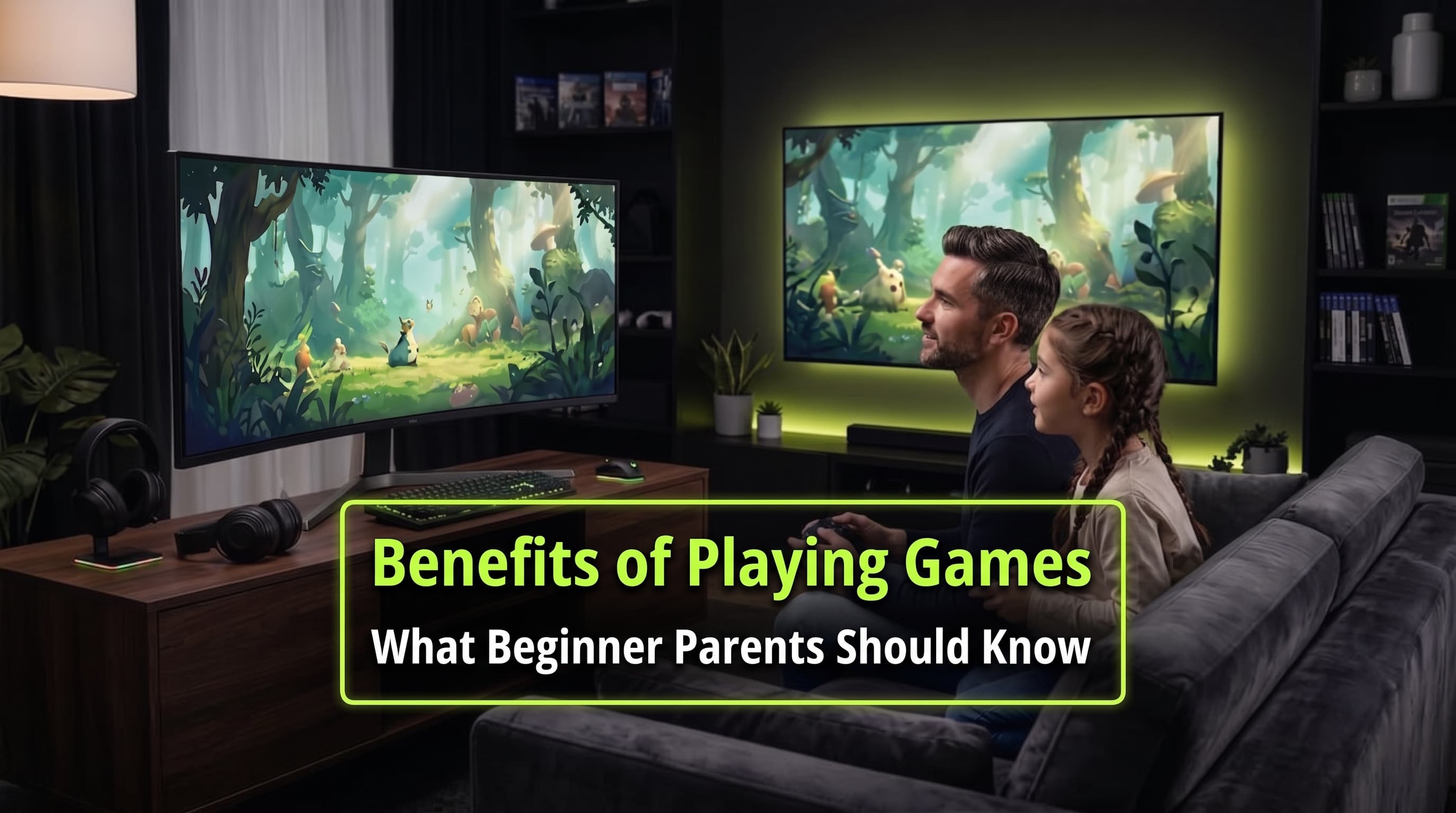
Playing games together as a family, like party games designed for multiple players, gives parents and kids a fun way to spend time together instead of leaving a child to play alone all the time — one of the benefits of playing games that helps bridge generational gaps well.
Parents who take the time to understand what their kids are playing also find it easier to talk about in-game content and the people their child meets in online games, allowing them to guide and support with real understanding rather than banning something they don't understand.
In short, the benefits of playing games go well beyond entertainment — covering cognitive development, social connection, and stress relief. The key is playing in balance and choosing age-appropriate games, especially for beginner parents who should understand game ratings and set reasonable time limits from the start. Once both the upsides and the precautions are understood, gaming can become a genuinely valuable activity for both the player and the family as a whole.